Polarization and Punishment: Stanford Professor Awarded 2025 Palmer Prize
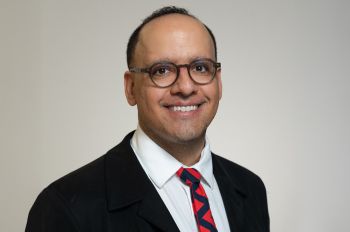
“The most sensible ways to approach criminal justice often are approaches that draw support from across the political divide,” says David A. Sklansky, Stanley Morrison Professor of Law at Stanford Law School.
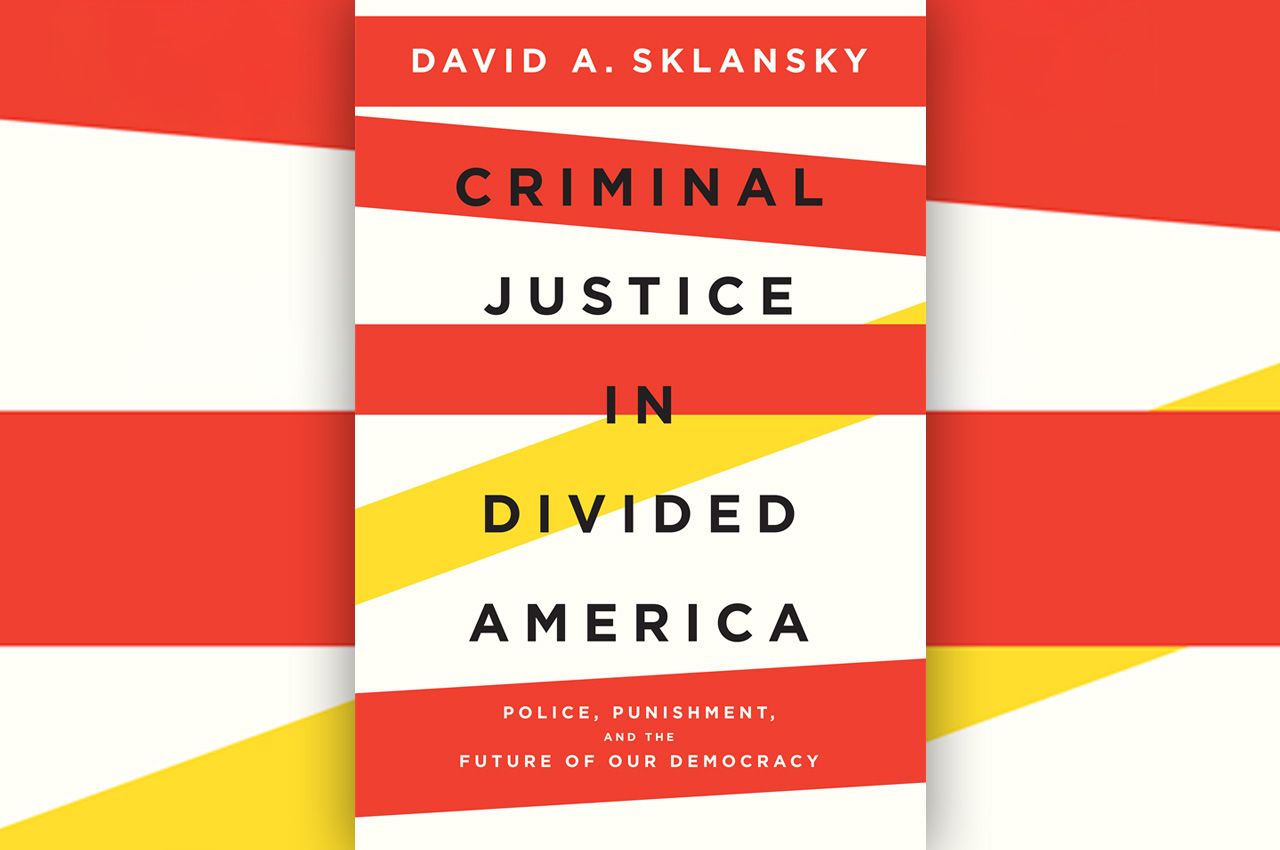
Sklansky won Chicago-Kent College of Law’s 2025 Roy C. Palmer Prize on Democracy, Civil Liberties, and the Rule of Law for his book, Criminal Justice in a Divided America: Police, Punishment, and the Future of Our Democracy (Harvard University Press 2025).
“American criminal justice is in crisis,” he writes in the book. “It doesn’t do nearly enough to prevent crime, and it doesn’t deliver nearly enough justice.”
In the book, Sklansky, who is also the faculty co-director of the Stanford Criminal Justice Center, argues that while political polarization and the crisis of criminal justice are typically considered to be two very different issues, they are tightly linked.
He says that we cannot fix one without addressing the other.
“Failures of criminal justice are a big part of what has led to the polarized poisonous politics that we have today,” he says. And he argues that “if we’re going to fix criminal justice, we need to take into account that polarization and that poison, because it limits the kinds of solutions that can have staying power.”
Sklansky explains that our current crisis of criminal justice is built on a bipartisan tough-on-crime ethos that lasted through the 1970s into the early twenty-first century.
“Many of these approaches were far too draconian and far too inequitable,” he says. “They caused massive damage to individuals, families, and communities without really doing anything to make our community safer. I think that the excesses of those hyper-punitive policies drove a lot of people toward ways of thinking about the criminal justice that, although I’m sympathetic to them, I don’t think ultimately represent good paths forward.”
Sklansky believes that one way to heal the system is to return to community policing, which was popular in the late twentieth century, while fixing its weaknesses.
“When it was done right, it represented an effort to get away from the police as a thin blue line separate from the community and toward a conception of the police as public servants who worked with other parts of the community to help build community safety,” says Sklansky.
Sklansky will visit Chicago-Kent to deliver the Palmer Prize lecture on November 10, 2026.
He will connect the concepts in his book, which was finished before the 2024 United States presidential election, with current events.
The Palmer Prize was established in spring 2007 by alumnus Roy C. Palmer ’62 and his wife, Susan M. Palmer, to honor a work of scholarship that explores threats to, or support of, the liberal democratic constitutional order. The $10,000 prize is designed to encourage and reward public debate among scholars on current issues affecting the rights of individuals and the responsibilities of governments throughout the world.